
DVA Assistance Dogs: How Veterans Can Access Life-Changing Support
For many veterans, an assistance dog can be life-changing—providing vital support for mobility, hearing, vision, or mental health conditions like PTSD. However, navigating the DVA assistance dogs process can be challenging, with strict eligibility criteria, lengthy approvals, and limited availability. Understanding how these highly trained dogs are funded, who qualifies, and what support is available can make all the difference in securing the right assistance. This guide breaks down everything veterans need to know to confidently access a DVA-funded assistance dog.
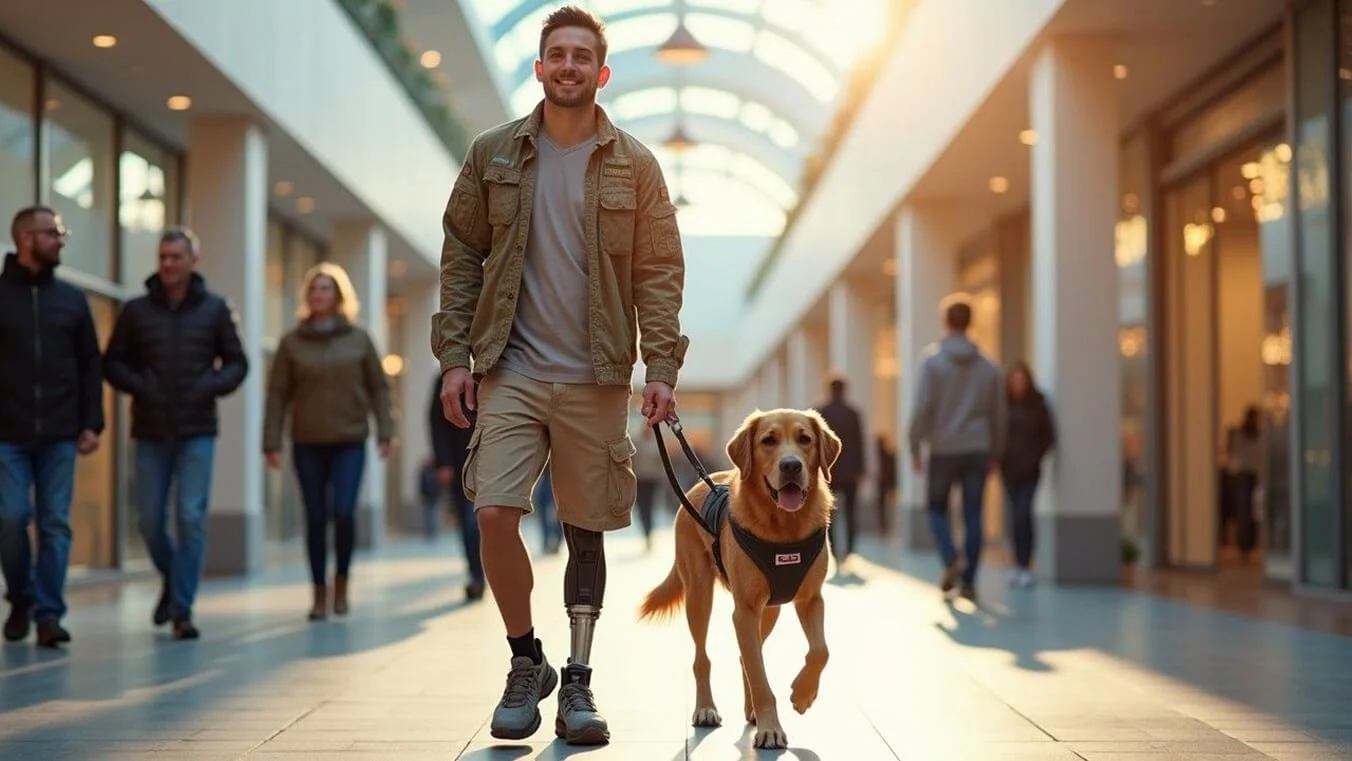
Start Your Claim Today
Get expert help with the entire claims process and secure the entitlements you deserve. With zero upfront fees, you only pay for successful claims.
In this Article:
How DVA-Funded Assistance Dogs Help Veterans
DVA-funded assistance dogs are trained to meet a veteran’s individual needs, offering support in key areas:
- Mobility Assistance: Retrieving items, opening doors, and providing stability for veterans with physical impairments.
- Sensory Support: Guide dogs assist visually impaired veterans, while hearing dogs alert handlers to critical sounds like alarms and approaching vehicles.
- Mental Health Support: Psychiatric assistance dogs help veterans with PTSD by interrupting panic attacks, creating barriers in crowds, and reducing anxiety.
- Public Access Training: Assistance dogs must pass a Public Access Test (PAT) to ensure they behave appropriately in public spaces and on public transport.
Who Provides DVA-Funded Assistance Dogs?
Veterans cannot purchase their own assistance dog and seek reimbursement from DVA. Instead, they must apply through an approved provider that meets state and territory legislation for training and accreditation.
To qualify, a veteran must have a clinical recovery goal requiring an assistance dog to perform specific, trained tasks. A treating health provider, such as a psychiatrist or occupational therapist, must formally recommend the dog as part of the veteran’s treatment plan.
DVA also covers ongoing maintenance costs, including veterinary care and food. If a veteran’s assistance dog nears retirement, DVA may fund a replacement dog if eligibility criteria are still met.
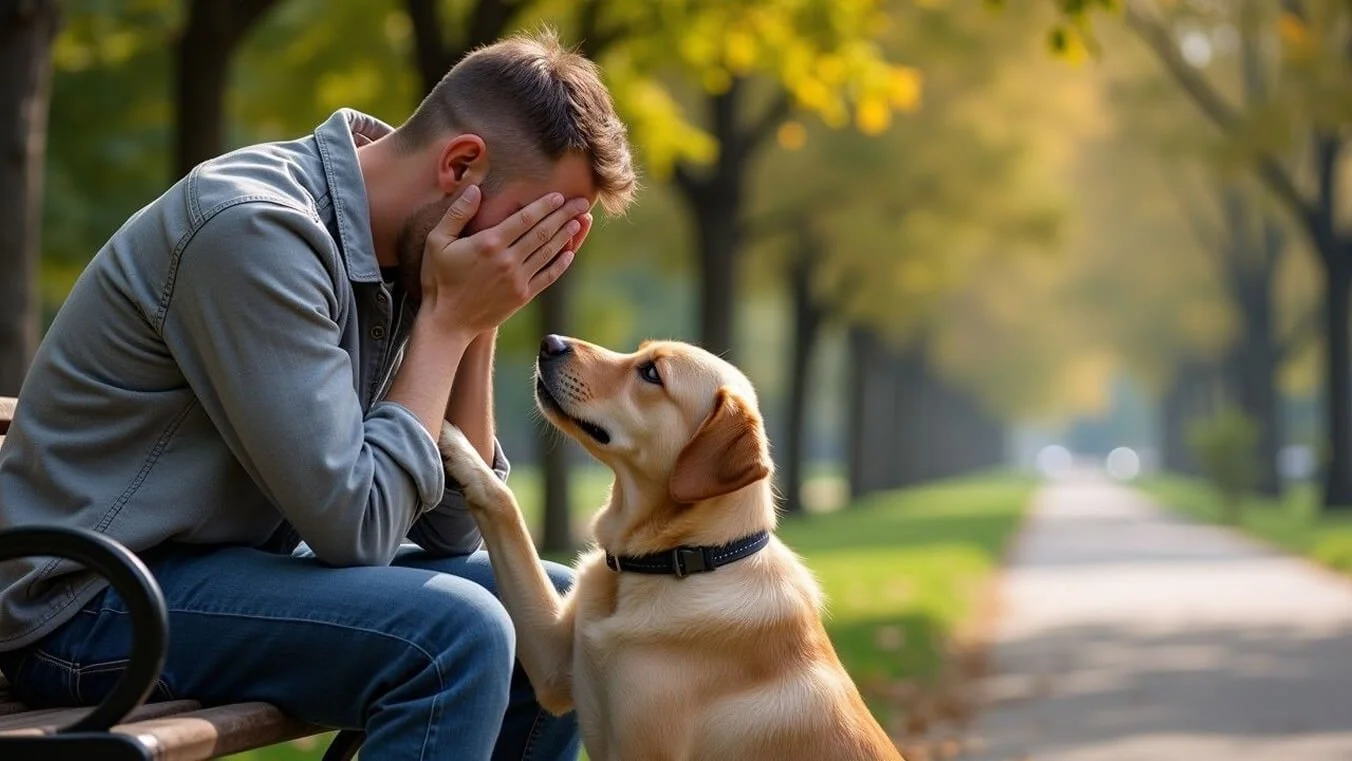
Types of Assistance Dogs Available for Veterans
DVA provides funding for assistance dogs to eligible veterans whose clinical needs require trained support animals. These dogs are individually trained to assist with specific disabilities. DVA provides assistance based on a veteran’s assessed medical need and clinical recommendation from an approved health professional.
1) Guide Dogs for Visually Impaired Veterans
For veterans with blindness or severe visual impairment, guide dogs assist with:
- Navigating unfamiliar or crowded spaces safely.
- Stopping at curbs, stairs, and obstacles to prevent injury.
- Enhancing independence and mobility in public places.
To determine eligibility, veterans must undergo a clinical assessment by an optometrist or ophthalmologist, who will evaluate the severity of their visual impairment and confirm whether a guide dog is the most suitable support option. DVA requires this specialist assessment before considering funding for a guide dog.
2) Hearing Dogs for Veterans with Hearing Impairment
Hearing dogs assist veterans with significant hearing loss, alerting them to essential sounds such as:
- Smoke and fire alarms, improving safety at home.
- Doorbells and phone notifications, ensuring better communication.
- Approaching vehicles and emergency signals, enhancing environmental awareness.
These dogs undergo specialised training to make physical contact and lead their handler toward the source of sound.
3) Mobility Assistance Dogs for Physical Disabilities
Veterans with mobility impairments, including wheelchair users, may be eligible for a mobility assistance dog, which helps by:
- Retrieving dropped or hard-to-reach items.
- Opening doors, cupboards, or drawers.
- Providing stability when walking or transitioning between surfaces.
Veterans with mobility impairments must be assessed by an occupational therapist to confirm that an assistance dog is necessary for their daily function and clinical recovery.
4) Psychiatric Assistance Dogs for Mental Health Conditions
For veterans diagnosed with Post-Traumatic Stress Disorder (PTSD), anxiety, or depression, psychiatric assistance dogs provide critical support by performing specific, trained tasks that help manage symptoms. These dogs are not the same as Emotional Support Animals (ESAs), as they are individually trained to assist with a veteran’s mental health condition in a practical and functional way.
Psychiatric assistance dogs can help by:
- Detecting early signs of distress and interrupting panic attacks before they escalate.
- Creating physical space in crowded environments to reduce anxiety and prevent overstimulation.
- Providing grounding techniques, such as tactile stimulation, to help veterans manage flashbacks or distressing episodes.
- Waking veterans from nightmares or guiding them away from overwhelming situations.
To be considered for a DVA-funded psychiatric assistance dog, a veteran must undergo a clinical assessment by a psychiatrist. The psychiatrist must determine that an assistance dog is clinically necessary as part of the veteran’s treatment and recovery plan. This decision is based on the veteran’s specific needs and how an assistance dog can provide benefits beyond standard mental health interventions.
Eligibility Criteria for a DVA-Funded Assistance Dog
DVA assistance dogs are only provided to veterans with a demonstrated medical need. The process requires:
Step 1: Medical Assessment
Veterans must be assessed by a qualified health professional, such as:
- A psychiatrist for PTSD-related cases (clinical psychologists cannot approve applications).
- An audiologist for hearing loss.
- An occupational therapist for mobility impairments.
Step 2: DVA Review and Approval
DVA evaluates applications to ensure:
- The service-related condition significantly impacts daily life.
- Alternative treatments are not sufficient.
- The veteran can meet the care needs of an assistance dog.
If approved, the veteran is matched with a contracted assistance dog supplier.
Step 3: Matching and Training
Veterans cannot choose their own dog—instead, they are paired with a dog based on their specific disability and lifestyle. The dog then undergoes:
- Personalised training to perform necessary tasks.
- Public Access Test certification to ensure safe behaviour.
- Veteran-handler training, helping veterans adjust to working with their dog.
The Application Process for a DVA Assistance Dog
Applying for a DVA-funded assistance dog is a structured process to ensure that only eligible veterans receive the right support. Since these dogs are highly trained working animals, DVA requires veterans to undergo medical assessment, application review, and a matching process before receiving an assistance dog.
Unlike pet adoption, veterans cannot apply directly for an assistance dog. Instead, they must meet strict eligibility criteria and work with DVA-contracted assistance dog suppliers to ensure the dog suits their needs. The application process consists of three key steps.
Step 1 – Obtain a Medical Assessment
Before applying, veterans must be assessed by a qualified health professional to confirm that an assistance dog is a medically necessary aid for their condition. The type of professional required depends on the veteran’s disability:
- Psychiatrist: Required for veterans with PTSD or other mental health conditions. Clinical psychologists cannot approve psychiatric assistance dogs—only a psychiatrist can provide the necessary recommendation.
- Audiologist: Required for veterans seeking a hearing dog to support severe hearing loss.
- Occupational Therapist: Required for veterans with mobility impairments who need a dog for physical assistance.
- General Practitioner (GP): Can provide an initial assessment but must refer veterans to a specialist for final approval.
The medical assessment must confirm that the veteran’s condition significantly impacts their daily life and that an assistance dog must be prescribed as part of their clinical recovery goals. The veteran must also demonstrate that alternative treatments, such as medication or rehabilitation programs, do not provide the same level of support as an assistance dog.
Step 2 – DVA Review and Approval
Once the medical assessment is complete, the veteran submits the assistance dog application form to DVA for review. The department evaluates each case individually, ensuring the veteran meets the minimum standard an assistance dog must fulfil under DVA’s guidelines.
During this stage, DVA assesses:
- The severity of the veteran’s service-related condition.
- Whether an assistance dog is more suitable than alternative medical interventions.
- The veteran’s ability to care for and maintain an assistance dog long-term.
If the application is approved, the DVA refers the veteran to a contracted assistance dog supplier. Veterans cannot source their own dogs—all approved dogs must come from DVA-approved providers who meet state and territory legislation requirements.
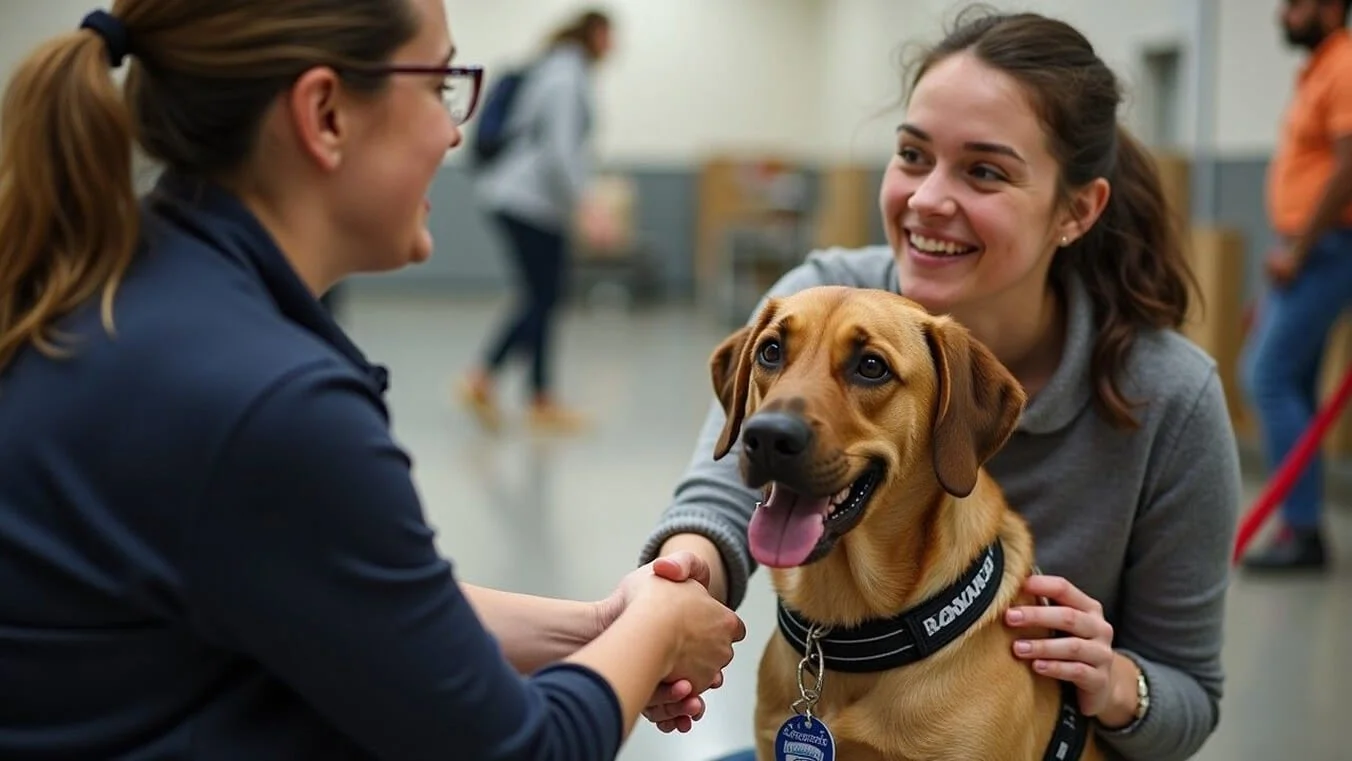
Step 3 – Matching and Training
Once referred to a provider, the veteran is matched with a suitable dog based on their specific needs and lifestyle. The dog undergoes further personalised training to support the veteran’s condition effectively.
The training process includes:
- Task-specific training: The assistance dog is trained to perform work or tasks directly related to the veteran’s disability, such as detecting signs of distress and performing tasks to help alleviate PTSD symptoms.
- Public access training: The dog must pass the Public Access Test to be considered safe and effective in accessing public places and using public passenger vehicles.
- Handler education: Veterans receive training on how to work with and care for their dogs, ensuring they can maintain the dog’s training and accreditation.
Once the training program is complete, the veteran officially receives their DVA-funded assistance dog. DVA also provides ongoing support, covering costs necessary to protect public health, such as veterinary care and training refreshers.
Following this structured application process, DVA ensures that only eligible veterans receive a fully trained assistance dog that enhances their independence, mobility, and overall wellbeing.
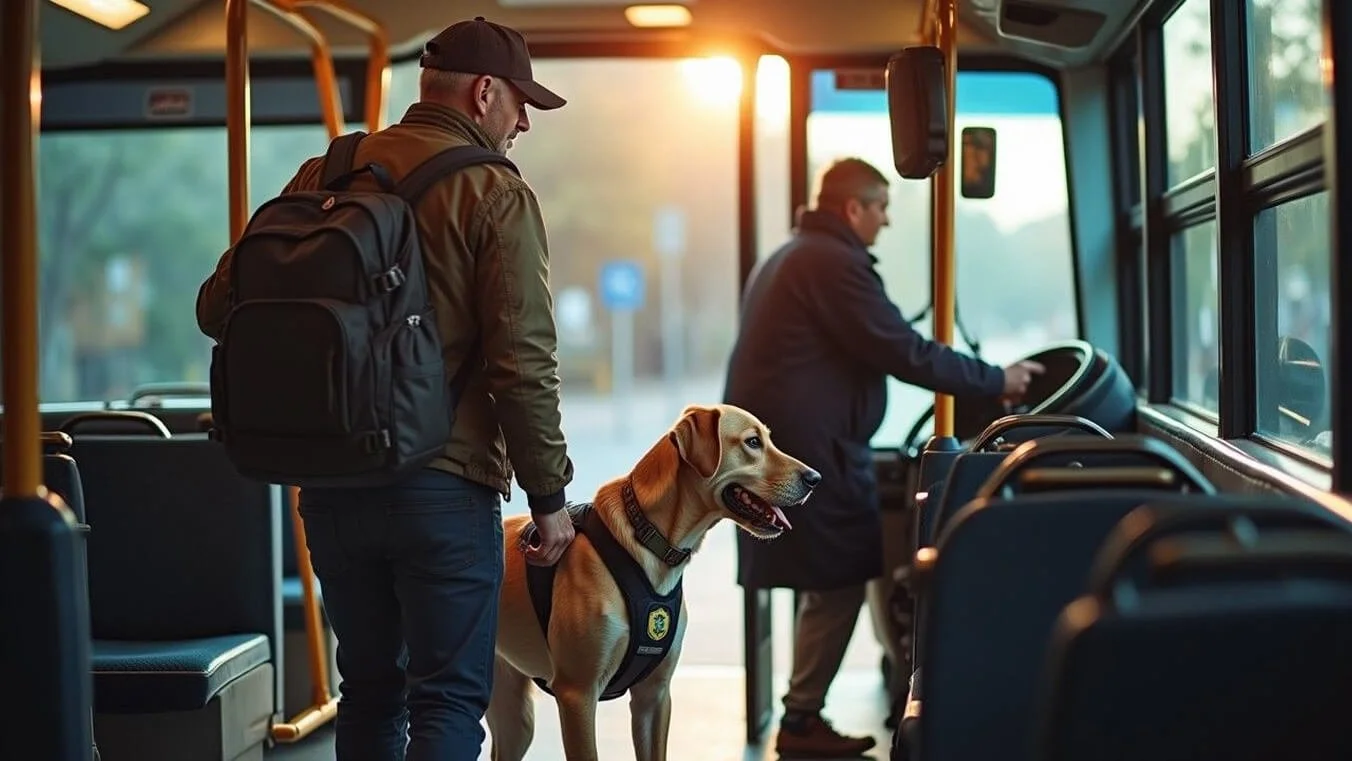
Public Access Rights for Assistance Dogs
Under Australian law, veterans with accredited assistance dogs cannot be refused entry to:
- Public places: Shopping centres, restaurants, hospitals, etc.
- Public transport: Buses, trains, ferries, and taxis.
- Rental properties: Landlords cannot refuse an assistance dog.
Veterans must ensure their assistance dogs must pass and maintain annual Public Access Test certification. This ensures they continue meeting safety, behaviour, and accessibility standards in public places. Businesses and transport operators may refuse entry if an assistance dog does not meet PAT requirements or has not maintained certification.
Privately Sourced Assistance Dogs vs. DVA-Funded Dogs
Veterans who wish to obtain an assistance dog have two options: they can either privately source and fund a dog themselves or apply for a DVA-funded assistance dog through an approved provider. However, it is important to note that DVA does not provide funding or reimbursement for privately sourced assistance dogs, regardless of training or certification.
Key Differences Between Privately Sourced and DVA-Funded Assistance Dogs
Can Veterans Use a Privately Sourced Assistance Dog Instead of a DVA-Funded Dog?
Veterans who prefer to source their own assistance dog can do so, but these dogs will not receive financial support from DVA. If a veteran wishes to apply for a DVA-funded assistance dog, they must go through the formal application process and be matched with a dog from a DVA-contracted provider that meets the necessary training and accreditation requirements.
Common Challenges Veterans Face When Applying for an Assistance Dog
Applying for a DVA-funded assistance dog can be complex, with some common hurdles:
1. Long Processing Times
- The approval process can take months, followed by additional wait times for matching and training.
- Solution: Veterans should submit a well-prepared application and explore alternative treatments in the meantime.
2. Strict Eligibility Criteria
- Not all veterans qualify—only those with a prescribed need and service-related condition.
- Solution: Work with professionals to strengthen the application and ensure it meets DVA criteria.
3. Limited Availability of Dogs
- High demand means not all approved veterans receive a dog immediately.
- Solution: Veterans should remain patient and proactive while exploring other support options.
Get Expert Guidance
Navigating the DVA assistance dog process can be overwhelming, with strict eligibility criteria, extensive documentation, and long wait times. Seeking professional support can help you better understand your entitlements, strengthen your application, and avoid unnecessary delays. Expert guidance ensures you receive accurate advice on eligibility, assistance with the claims process, and alternative support options if a DVA-funded assistance dog isn’t the right fit for your situation.
Maximise Your DVA Benefits with Expert Guidance
Navigating the DVA claims process can be overwhelming, with complex eligibility criteria, lengthy timeframes, and extensive documentation. But securing the compensation and support you deserve shouldn’t be a battle you face alone. At Veterans First Consulting, we provide expert, independent advocacy to simplify your claim, improve your success rate, and ensure you receive fair treatment under DVA policies. Whether you're starting a new claim, appealing a decision, or unsure of your eligibility, we’re here to guide you every step of the way. Contact us today and take control of your future with expert support on your side.
Written by

Common DVA FAQs
Have other questions?
Contact us so we can help.
No. A veteran cannot choose their dog. The dog must be suitable for an assistant dog role and must be provided by a DVA-approved supplier. The dog must meet strict training and accreditation standards to qualify.
Veterans must use contracted dog providers approved by DVA. Requests for specific providers may not always be granted.
DVA assistance dogs are individually trained to support a veteran’s condition. Hearing dogs are trained to respond to alarms and other alerts. Mobility assistance dogs help open and close doors, retrieve objects, and provide stability. Psychiatric assistance dogs assist with PTSD symptoms by offering comfort, creating space in crowds, and waking veterans from nightmares.
When an assistance dog is nearing retirement, veterans may apply for a replacement assistance dog if they still meet eligibility criteria. DVA will reassess the veteran’s condition before approving a new dog.
If an assistance animal has an infectious disease or develops a condition that affects its ability to work, the veteran may be eligible for a replacement assistance dog. The veteran must follow veterinary recommendations to maintain the dog’s health.
If an assistance animal has an infectious illness, the veteran must seek veterinary care immediately. Assistance dogs must remain healthy to continue working safely.
If a veteran can no longer care for their assistance dog, DVA must be informed. Veterans must prove they are still suitable for an assistance dog throughout the approval and training process.
START YOUR CLAIM
Book a Free Call
Join more than 10,000 veterans in getting the support they deserve. Leave us a note and our experts will be in touch shortly to discuss your new claim or claim reassessment.
Zero upfront fees – only pay for successful claims
10,000+ veterans served – we know what we're doing
Australia's largest DVA advocacy group
Explore Related Articles

How to Support Student Veterans Through Study and Recovery

Veterans Apprenticeship Program: Your Guide to DVA Pathways and Support