DVA Hearing Aids: What Each Veteran Card Covers
Voices in a busy café have started to blur, and you wonder if your DVA card can help. DVA hearing aids reach you through a government hearing program, and your card decides what you can get. I explain what each card covers, what should be free and when to hold off until approval lands.

Start Your Claim Today
Get expert help with the entire claims process and secure the entitlements you deserve. With zero upfront fees, you only pay for successful claims.
In this Article:
Which Veteran Card Gets You Hearing Help
DVA checks two things before it funds hearing care:
- Your card type
- For a White Card, the conditions listed against your name
A Gold Card Pays for Hearing Care Whatever the Cause
A Gold Card pays for clinically required treatment of all medical conditions, if the care is in Australia. It does not matter whether your service caused them.
DVA's Veteran Card All Conditions page sets this out. It adds that care is usually free when the provider accepts the card.
So for hearing, you do not have to prove that gunfire, engines or radio headsets did the damage. You do not need an accepted hearing condition either.
Under the MRCA, the page lists three routes to the card. Two depend on whether you qualify for the Special Rate Disability Pension or the Additional Disablement Amount. The third is a rating of at least 60 impairment points.
The page lists other routes too, such as some for families of veterans whose death was linked to service. My Gold Card explainer walks through each route in more detail.
One point we always make is that the Gold Card is not something you can apply for on its own. It comes once DVA decides you meet one of those routes.
A White Card Turns on Your Accepted Conditions
The White Card works differently. It pays for conditions that DVA agrees are linked to your service.
DVA's Veteran Card Specific Conditions page lists three extra areas of care for some holders. They are any mental health condition, cancer (malignant neoplasm) and pulmonary tuberculosis. Hearing problems are not on that list.
DVA's hearing page says a White Card holder may get hearing treatment once DVA accepts tinnitus or hearing loss. If neither appears on your card, the card alone will not cover your aids.
To see which conditions your card lists, log in to MyService or phone 1800 VETERAN. DVA also asks you to show each new provider which conditions your card covers. Do this at least once for every provider.
When a White Card holder asks me about hearing aids, the first thing I look at is that list. My White Card guide explains what else the card can pay for.
Still Serving in the ADF
Full-time serving members get health care from Defence first. The All Conditions page adds that DVA usually cannot issue an MRCA Veteran Card until you leave the ADF.
Tinnitus follows the same pattern. An August 2026 DVA magazine article on tinnitus treatment says serving veterans get tinnitus care through Defence.
Reservists and cadets sit in a different spot. The Specific Conditions page says they can still get treatment from DVA while they serve.
Partners and Family Members Who Hold a Card
Not every cardholder is a veteran. The All Conditions page explains that some partners and dependent family members hold a Gold Card too.
DVA's hearing page asks these cardholders to confirm with the Health department whether the HSP covers them. DVA's provider guidance adds that HSP rules differ from DVA's, so check before you book.

The Government Program Behind Most Hearing Aids
For most cardholders, new hearing aids come from the Australian Government's Hearing Services Program, usually called the HSP. DVA can pay for extra devices or support on top of it in some cases.
What Should Cost You Nothing
The HSP range includes high-quality aids with a full subsidy. DVA's hearing page lists what an eligible cardholder should get without paying:
- Your first appointment at the clinic
- Any HSP device the clinic prescribes
- Lessons on wearing and using your new devices
- Rehabilitation visits after the fitting, plus ongoing support
- Batteries, upkeep and repairs for any device the HSP supplied
This support lasts while you stay eligible. Anything beyond the standard range needs DVA's approval too, so we never call these lifetime hearing aids.
We also remind veterans that DVA cards are not a form of private health insurance. They are DVA benefit programs, and DVA's rules decide what they pay for.
Extra Help for New Hearing Aid Users
Rehabilitation Plus is an HSP option for people new to hearing aids. The option applies only when the device is fully subsidised. DVA's provider guidance on hearing says it can run in groups or one-on-one.
Where the standard program falls short, your clinic can pass you on to a Community Service Obligations program (CSO). That depends on meeting its criteria, and the Health department runs it.
Cochlear Implant Support
Implants may suit people whose hearing loss has become severe. DVA says the implant and related treatment are funded via the HSP, alongside the Medicare Benefits Schedule (MBS).
Where your card covers hearing loss, the routine upkeep of an implant should cost you nothing. DVA may also fund add-ons and extra services that suit the implant. Ask the clinic which implant costs, if any, sit outside that cover.
Getting Fitted Without a Surprise Bill
The process starts at a hearing clinic, not at DVA. A little care at the first visit can stop a surprise cost later.
Finding a Clinic
Health's website has a provider search that lists hearing clinics near you. The HSP also runs a phone line, listed on that site.
When you book, mention your DVA card and ask if the clinic accepts it. Care is usually free when it does.
Bring the card with you. DVA's card pages say the digital version in MyService or the myGov app works too.
Seeing your GP first is sensible too. A GP can send you on to a local audiologist, or arrange a referral to an ENT. That is the specialist doctor for ears, noses and throats.
At the same visit, ask about add-on listening devices that work alongside hearing aids. We cover those further down.
Wait for Approval Before You Pay
DVA's advice is plain: keep your wallet closed at the fitting. The department will not refund a device once you have paid for it.
If a device is not free, have the clinic seek DVA's or the HSP's approval first. Only buy once that approval arrives.
Some veterans pick an aid that is only partly subsidised. DVA warns this can leave a large gap it will not pay back.
No approval, no purchase. If veterans remember one piece of hearing advice, I want it to be that.
Care After the Fitting
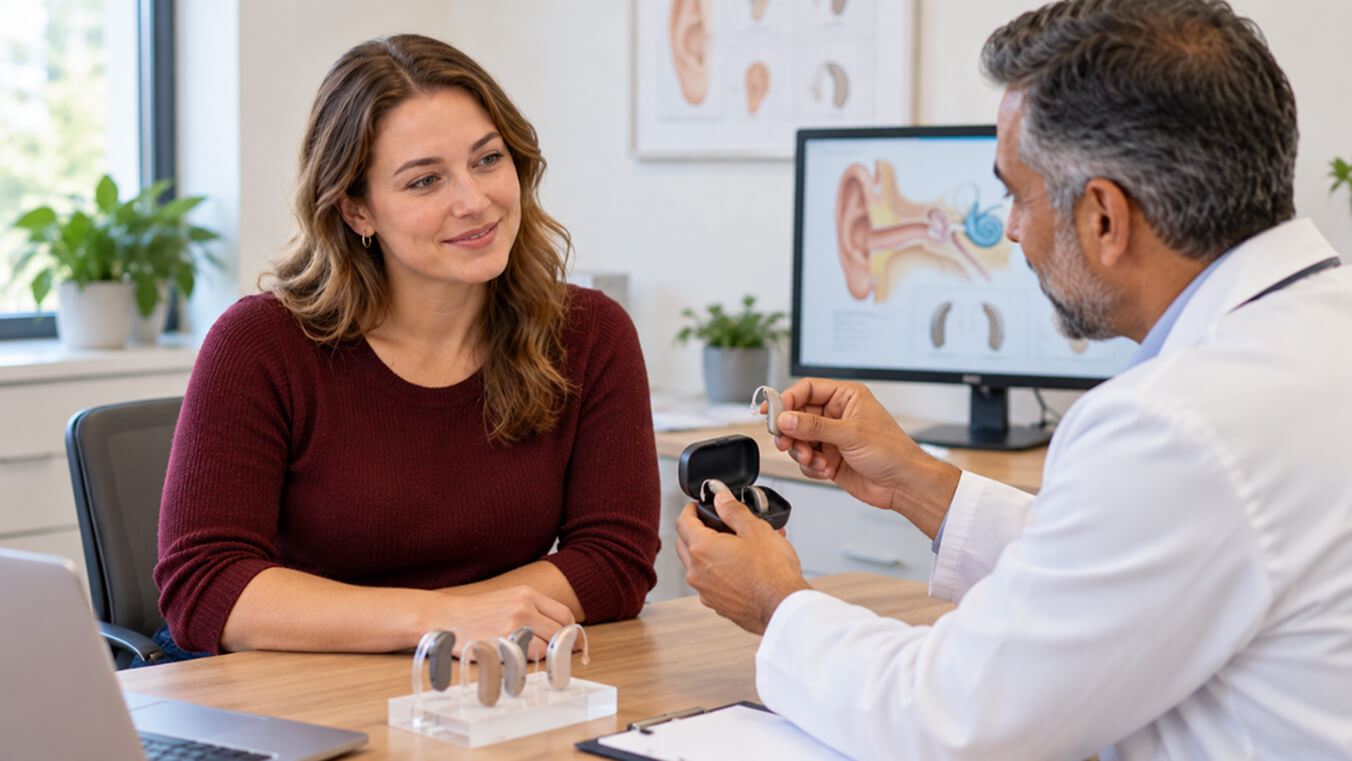
Support does not stop at the fitting. The HSP package includes follow-up visits and continuing help.
New hearing aids can take time to get used to. Go back if the sound does not feel right.
Batteries, repairs and upkeep for HSP devices sit in the same package. If an aid stops working, call the clinic that fitted it before you pay anyone else.
Questions to Ask at Your First Visit
These questions will help you leave the first visit with no loose ends:
- Is the HSP fully subsidising this device?
- If it has a cost, has approval been sought and granted?
- Would an add-on listening device help with the TV, the phone or group settings?
- What follow-up support comes after the fitting?
- Who handles repairs and batteries?
We suggest writing down the answers, with the date and the name of the person you spoke to. That note helps if a bill turns up later. Keep any approval email or letter with it.
When the Standard Range Falls Short
Some hearing needs go beyond what the HSP range can handle. DVA treats these as exceptional circumstances. In that case, the clinic can email DVA's health approvals team with its request and supporting reports.
DVA then looks at the options together with the clinic, and its provider guidance sets a firm test. DVA will pay for aids beyond the HSP range only if the clinic shows that range cannot meet your needs. That covers HSP aids combined with add-on devices from DVA's Rehabilitation Appliances Program, or RAP.
If the clinic says the standard range will not work, ask what evidence it plans to send DVA.
Since 20 January 2025, DVA has handled these requests under a new framework for veterans' hearing services. It brought in an updated request form for clinics. DVA also updated its own review, so each request is weighed against its Wellbeing Framework.
DVA's January 2025 news on hearing services said the HSP supplies partly subsidised devices to up to 10,000 veterans a year. It added that the framework should make funding decisions fairer and more consistent.
Listening Devices That Pair With Your Aids
Hearing aids do not always fix the TV, the phone or a noisy room. That is the job of assistive listening devices, which DVA calls ALDs.
Who Can Get Assistive Devices
ALDs are supplied under the RAP. DVA's RAP guideline for these devices sets two conditions for them.
There must be a clinical reason for the device. You also need a Gold Card, or a White Card that lists a condition related to that need.
The same guideline draws a useful line. Hearing aids count as an HSP item, not an ALD, but you can use the two together.
A health provider assesses the need first. Only a suitably qualified provider may prescribe equipment from the RAP. For TV headsets, FM systems and streamers, that means an audiometrist or audiologist.

What the Range Includes
DVA's hearing page names the kinds of ALD a provider may prescribe:
- Headsets for listening to the TV
- Induction loops
- Tinnitus devices
- Remote microphone and FM systems
- Wireless streamers that carry sound into your hearing aids
- Doorbells fitted with a signal light
- Smoke alarm kits for people who are hard of hearing
- Some phone accessories, which come through your phone company
DVA says ALDs, their repairs and any parts or replacements cost you nothing. The clinic prescribes the device and seeks DVA's approval where needed.
Smoke alarm kits have one more test. The RAP guideline asks for a profound loss of hearing, or severe loss in your better ear. A suitably qualified health professional must make the diagnosis.
DVA's page on aids and equipment also lists hearing assistance dogs among the items it can supply. My guide to DVA's appliance program covers how RAP items are prescribed and delivered.
Tinnitus Support Through Your Card
Tinnitus often turns up alongside hearing loss. DVA funds care for it under the same card rules as hearing aids.
DVA's Tinnitus Program
DVA may pay for tinnitus care for Gold Card holders and for White Card holders whose card lists tinnitus. For milder tinnitus, the hearing page points to standard HSP aids as the usual answer.
DVA's hearing page is frank that no treatment cures tinnitus. Its August 2026 magazine article says the goal is for the noise to bother you less, so daily life runs more smoothly.
DVA's provider guidance aims the program at severe tinnitus, or at people the HSP does not cover. Options range from a rehab plan to sleep aids or hearing aids set up with a tinnitus mode. The referral has to come from an ENT or audiologist.
The clinic also needs DVA's approval before any treatment starts. Ask it to confirm this is in place before your first session.
A Pilot Linked to Permanent Impairment Claims
DVA and Hearing Australia also run a tinnitus pilot together, as the same article explains.
It covers serving members and veterans under 60 whose tinnitus DVA has accepted. They must also lodge a claim for permanent impairment under the MRCA.
DVA's page on this pilot says DVA contacts eligible people directly and refers them to Hearing Australia. DVA fully funds any approved treatment. Our tinnitus claims page covers the claim side of tinnitus.
When Your Card Does Not List Hearing Loss
A White Card only funds hearing aids when it covers tinnitus or hearing loss. When neither is listed, we treat it as a claim question first and a clinic question second.
How Our Team Helps
Our team prepares initial liability claims for lodgement with DVA, including hearing loss claims and tinnitus claims. We work on the claim itself. The hearing aid itself comes from the clinic once DVA accepts the condition.
Supplying and fitting hearing aids is not something we do.
Get the Card Right, Then Book the Fitting
Your card sets your path to DVA hearing aids, while waiting for approval helps you avoid a surprise bill.
We have supported over 10,000 veterans through the DVA claims process. If your White Card does not list tinnitus or hearing loss, contact Veterans First Consulting and we can talk through a claim.
Written by
START YOUR CLAIM
Book a Free Call
Join more than 10,000 veterans in getting the support they deserve. Leave us a note and our experts will be in touch shortly to discuss your new claim or claim reassessment.
Zero upfront fees – only pay for successful claims
10,000+ veterans served – we know what we're doing
Australia's largest DVA advocacy group
Explore Related Articles

DVA Medical Certificate: When You Need One and How to Submit It
DVA Medical Abbreviation Eye: Understanding Vision Care and Assessment Terms for Veterans