
Support for Veterans With PTSD: Where to Find Help in Australia
Who do you call first when PTSD starts to affect your sleep, your temper or your home life?
Support for veterans with PTSD in Australia runs from a 24/7 phone line to DVA-paid treatment, and much of it needs no claim.
Read on for who runs each service, who qualifies and what's new in 2026, then explore our related guides.

Start Your Claim Today
Get expert help with the entire claims process and secure the entitlements you deserve. With zero upfront fees, you only pay for successful claims.
In this Article:
Urgent Help, Day or Night
Is anyone at risk right now, including you? Ring for help first, then come back to this guide. Each number below appears on DVA's crisis contacts page:
- Triple zero (000): When anyone, including you, could come to harm
- Open Arms - Veterans & Families Counselling, 1800 011 046: Counsellors on call around the clock, for veterans and family
- ADF Mental Health All-hours Support Line, 1800 628 036: Serving members and family can call.
- Lifeline, 13 11 14: Crisis support over the phone
- 13YARN, 13 92 76: A 24/7 crisis line for Aboriginal and Torres Strait Islander people
- 1800RESPECT, 1800 737 732: Counselling for anyone affected by sexual assault or domestic and family violence
Anonymous Support Through Safe Zone
Would you rather stay anonymous? Safe Zone Support on 1800 142 072 takes calls from anyone with past or present ADF service. Family members are welcome to call too.
You choose what you share. Calls are not recorded, though the counsellor keeps a brief note of each one. Safe Zone may pass your number to emergency services if someone is at risk.
Who Provides What and When You Need a Claim
Help for PTSD comes from several services. Each plays a different part. The table shows who covers each need and which ones need a claim.
Two things new in 2026 sit outside the table. A presumption can simplify some PTSD claims. A new agency also points veterans and families to services.
PTSD After Service: Common and Treatable
PTSD shows up more among veterans than among other Australians. Proven treatments exist. DVA may fund them for eligible veterans, or Open Arms may provide them.
How Common PTSD Is Among Veterans
A 2024 DVA article on PTSD cites research on ADF personnel. It estimates the rate at 8 per cent of serving members. Among personnel who have transitioned out, the figure is 17.7 per cent.
For the Australian population, the same article's estimate is 5.7 per cent. It notes that symptoms can also appear years later, or ease and then return.
Treatments That Work
Open Arms' PTSD page favours talk therapy over medicine as the opening option. Its top pick is a form of cognitive behavioural therapy (CBT) centred on trauma. Sessions help you work through hard memories so they lose some of their power.
Treatment can still work even after years of living with PTSD, the page notes. The DVA article names other proven therapies too:
- Cognitive processing therapy
- Prolonged exposure
- Eye movement desensitisation and reprocessing, known as EMDR
A doctor may also prescribe medicine, such as an antidepressant, to ease some symptoms. Our PTSD guide goes deeper into symptoms and triggers.
Picking a First Contact
DVA's PTSD page points to two first contacts: Open Arms and a GP. GPs can:
- Hear what has been going on for you
- Send you on to a psychiatrist, a psychologist or a hospital trauma program
- Prescribe medicine if it would help
Open Arms suggests veterans ask their GP about a Veteran Health Check too. We explain how GP referrals work in a separate piece on the mental health care plan.
Care DVA Funds Without a Claim
Many veterans can get their mental health care paid for by DVA without lodging any claim. Nor do you need to link it to service. DVA calls this Non-Liability Health Care, shortened here to NLHC.
Who Qualifies
The test on DVA's NLHC page is CFTS, short for continuous full-time service. Even one day is enough. Reservists count too if they had a CFTS period.
A reservist who never had CFTS has three other ways in:
- Border Protection Service
- Being involved in a serious training accident connected with service
- Disaster Relief Service
Reserve training days alone don't count as CFTS.
Members still serving full time can use NLHC too. DVA expects them to use Defence health services first, though. A Gold Card already includes mental health care, so its holders don't need NLHC.
What NLHC Covers
NLHC isn't only for PTSD. Once you're eligible, it covers every kind of mental health condition. DVA's list of what it may fund includes:
- GP, psychologist and psychiatrist appointments
- Occupational therapy and social work focused on mental health
- Medicines prescribed to treat these conditions, within the limits below
- Drug and alcohol programs DVA recognises
- Psychiatric hospital admissions, private or public
- Tests and imaging needed for assessing or diagnosing the condition
- Counselling from Open Arms
Care continues while you need it, with no end date. Before booking, ask whether the provider will take your White Card as payment.
Limits on Medicines
Not every medicine is covered, though. DVA subsidises scripts through its Repatriation Pharmaceutical Benefits Scheme (RPBS). It may cover more items than the Pharmaceutical Benefits Scheme (PBS).
DVA's RPBS page says the RPBS has to provide the medicine. Your clinical need for it must also be assessed. White Card scripts must also treat a condition your card lists.
Your doctor may need DVA's approval before prescribing some items. Any medicine on neither the PBS nor the RPBS list always needs approval.
Each covered item costs $7.70 at the pharmacy, as DVA's Veteran Card guidance explains. That charge applies until your scripts for the year reach the safety net. Choose a dearer brand of the same medicine and you pay the extra.
Without your card at the pharmacy, you may pay more. The cost may also not count toward the safety net.
Checking Your Card Lists Mental Health
DVA records NLHC against your White Card, whose formal name is Veteran Card - Specific Conditions. To check it in MyService, open Your card, then View card details, then Conditions listed.
You're covered if that list shows every mental health condition, marked treatment only. A single named mental health condition, PTSD for example, tagged Treatment or Treatment Only also counts.
If neither shows, request the cover through MyService, by email to NLHC@dva.gov.au or on DVA's application form. Phoning 1800 838 372 (1800 VETERAN) works too.
After DVA approves the request, the letter it sends is enough for a provider until the card catches up. DVA can also refund eligible bills going back as far as 3 months before it received your application.
DVA's Provisional Access to Medical Treatment program funds care for 20 listed conditions until DVA rules on a claim. PTSD isn't on that list, but NLHC can pay for treating it whether or not you claim. My NLHC guide walks through the application.
Open Arms: Counselling, Groups and Peers
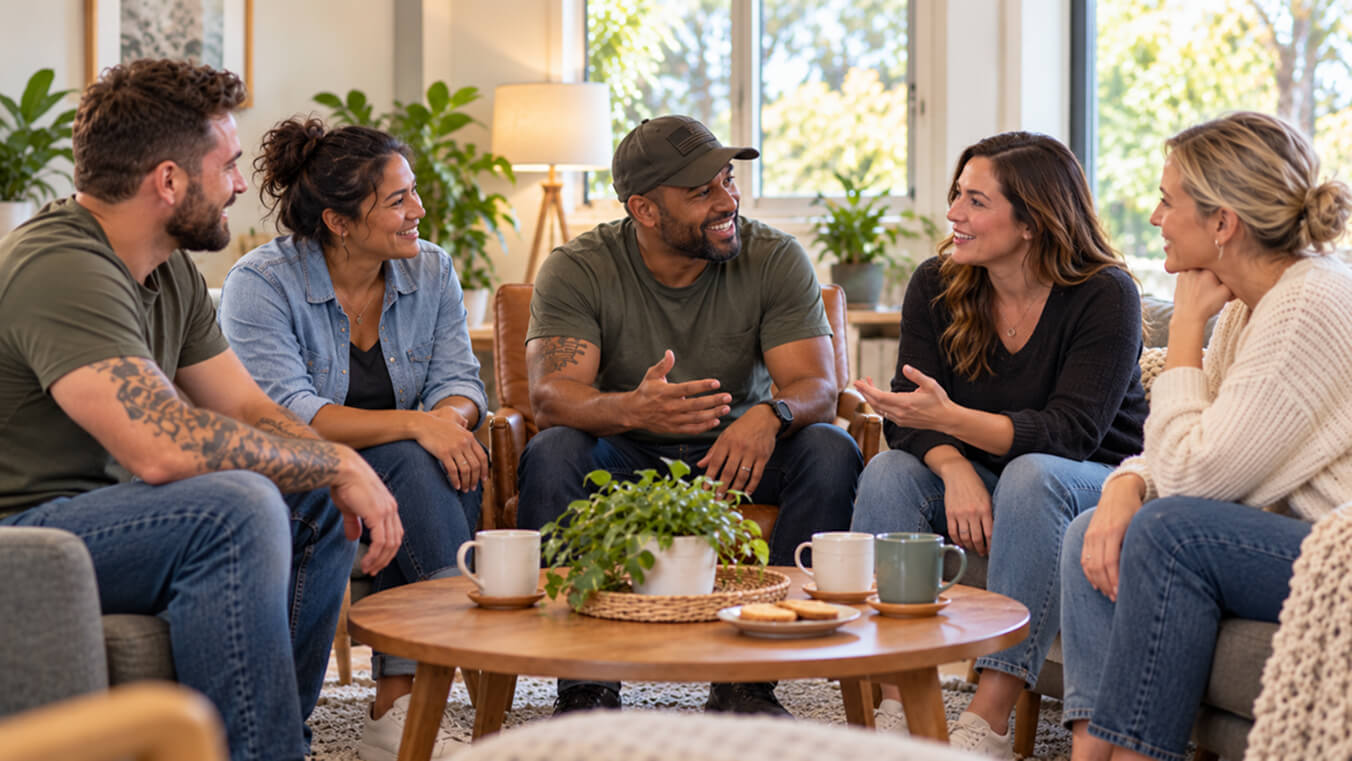
Open Arms counsels veterans and families across Australia. Its staff know military life. The line answers at any hour.
Who Open Arms Helps
Open Arms' eligibility rules mirror the NLHC test. One CFTS day is enough. It also opens the service to your immediate family.
If you are a reservist with no CFTS, the same three routes listed above apply. For Open Arms, having seen a serious training accident also counts.
Family here means partners, children and an ex-partner who co-parents with you. After a service member's death, parents and siblings may qualify too.
Ways to Get Counselling
Counselling with Open Arms runs in person, by phone or online. Its list of common concerns includes:
- PTSD
- Sleep problems
- Anger
- Relationship or family strain
- Alcohol or drug misuse
One proven therapy also comes in a fast-track version. Prolonged exposure normally runs for 10 weeks. That is a lot of time to set aside.
A trial run with Phoenix Australia and Defence compressed it into 10 daily sessions across two weeks. Both versions cut symptoms equally well. Open Arms now lets veterans and serving members choose either one.
Groups and Peer Support
Open Arms also runs free group programs. Some meet in a room together and some run online. Those relevant to PTSD include:
- Managing Anger
- Sleeping Better
- Recovery from Trauma
- Connected Couples, for a veteran and partner together
All four are open to partners and grown-up children too, with Connected Couples attended as a couple.
The Community and Peer Program pairs you with a peer worker. Each peer has lived military life, either as someone who served or as someone's partner or relative. Each has also worked through mental health challenges of their own.
My roundup of PTSD support groups for veterans covers groups run by other organisations as well.
PTSD Coach and High Res: Where the Tools Went
Some pages still recommend PTSD Coach Australia or High Res. A few of them sit on Open Arms and DVA sites. But Open Arms' page on apps and online resources now says neither app can be downloaded.

The tools have moved to the Open Arms website. Its online programs add a free mindfulness course that runs for eight weeks. Open Arms clients and non-clients alike can join.
There are two peer forums as well. One forum serves veterans and the other serves carers and families. Mental health professionals moderate both.
Intensive and Specialist Options
Weekly sessions are not always enough. DVA can fund three more intensive options. Each sets separate entry rules.
Trauma Recovery Programs
DVA funds each of these hospital-based PTSD programs. DVA's guide for the hospitals that run them sets the entry rules. Applicants need a clinical diagnosis of PTSD plus a current White Card or Gold Card.
Next, a referral can come from your GP or a psychiatrist, if the program suits you clinically. The hospital then assesses your suitability and places you in a treatment group.
The same guide lists hospitals in five states:
- NSW
- Queensland
- SA
- Victoria
- WA
Open Arms' list of contracted hospitals notes that none currently run programs in Tasmania, the ACT or the NT. People there are asked to call Open Arms instead.
DVA's PTSD page adds that each program mixes group and one-on-one work. Length varies by hospital, typically from about 4 full-time weeks to 12 part-time weeks.
Psychiatric Assistance Dogs
Some veterans with PTSD work with a trained dog. It might wake them from a night terror or guide them away from a stressful situation. To join DVA's Psychiatric Assistance Dog Program, you need a psychiatrist's PTSD diagnosis plus a Gold Card or White Card.
You also need 3 months or more of PTSD treatment with a psychiatrist or a psychologist. You must also be assessed as having the emotional resilience to train and care for the dog.
Once you are approved, finding the right dog can take time. Training you and the dog as a team can take between 18 months and 2 years. The application is explained in my DVA assistance dogs guide.
Psychedelic Assisted Psychotherapy for Hard-to-Treat PTSD
DVA can fund MDMA for PTSD when it is paired with intensive psychotherapy. DVA calls this psychedelic assisted psychotherapy (PAP). Under DVA's rules for PAP, only a psychiatrist authorised to prescribe it can deliver it or seek funding.
That psychiatrist must show you have tried several standard PTSD treatments without success. Even with a diagnosis, you might not meet the strict clinical rules. They are there to check the treatment is safe for you.
DVA notes that PAP is still emerging. Some risks and side effects may not yet be known. If you pay for it yourself as a private patient, DVA won't refund the cost.
When PTSD Gets in the Way of Work
Two DVA supports may help if PTSD makes work hard. One pays income during a claim, while the other assigns a case worker.
Veteran Payment: Income Before a Decision
Veteran Payment works as an income stopgap while DVA decides your MRCA claim. That claim must be for PTSD or another mental health condition.
You qualify only if your capacity for work is 8 hours a week or less. You must also pass income, assets and residency tests.
When you lodge that claim, you must also be in Australia and under Age Pension age. A partner can sometimes receive it as well. Payments end 42 days after DVA's decision on the claim.
The order is claim first, payment application second, both through MyService. Your GP's certificate backing up that work limit is due within 4 weeks of payments starting. Taking part in rehabilitation is also required, where you're able.
Veteran Payment counts as taxable income. You can't hold it alongside JobSeeker, Disability Support Pension, incapacity payments or certain other income support. It also rules out the Pensioner Concession Card and the Energy Supplement.
For help with the forms, DVA's 1800 VETERAN line can assist. Our team can also prepare the Veteran Payment application alongside your claim.
A Case Worker for Wellbeing Goals
Under DVA's Wellbeing and Support Program, veterans with a DVA-accepted condition may be assessed for a place. If you join, a case worker may support you for a year at most. They set goals with you and link you to local and DVA services.
Self-referral is by phone, through 1800 VETERAN. If you only need help getting back to work, DVA's rehabilitation program may suit you better.
Help for the People Around You
If a veteran in your family has PTSD, you can get support too. Start with Open Arms.
Counselling for the Family
Family counselling from Open Arms is available when your veteran has CFTS. Even one day is enough. Besides helping you support them, counsellors can also support your own wellbeing.
The same page lists Relationships Australia for counselling or mediation. Its number is 1300 364 277.
Programs built for partners are listed in my guide for partners of veterans living with PTSD.
Training for Family and Friends
Friends and family can also learn the warning signs that a veteran may be thinking about suicide. The training covers how to connect them with help.
Worried about someone right now? Ring 000 in an emergency, or Open Arms at 1800 011 046.
These suicide prevention courses have DVA funding. They run nationwide, in person as well as online. The options include Mental Health First Aid and three LivingWorks courses.
A New Agency for Finding Services
The Veteran and Family Wellbeing Agency opened in July 2026. It helps the veteran community find local services through a national directory. Its helpline, 1800 823 922, is staffed 8.30am to 5 pm on weekdays.
An August 2026 DVA update says the Agency adds to existing services rather than taking over from them. Open Arms still runs counselling. DVA still handles treatment, rehabilitation and claims.
Where a Claim Fits
One thing veterans ask me is whether treatment has to wait until DVA decides a claim, and it doesn't. A claim is an optional, separate step, asking DVA to recognise a service link for your PTSD.

PTSD and Presumptive Liability
For some conditions, presumptive liability means DVA presumes the service link instead of asking you for proof. Claims that reach DVA after 30 June 2026 are covered.
A confirmed diagnosis remains a requirement. Your service also has to meet the criteria set for the condition.
PTSD appears in the 2026 determination that lists the conditions. That listing covers veterans with more than 28 days of warlike service. Separate periods of warlike service can count towards that total.
A separate part covers PTSD linked to abuse in service. It applies where the veteran received one of these maximum payments for that abuse:
- A category 4 Defence Abuse Response Taskforce payment
- A tier 1 Defence Force Ombudsman reparation payment
- A maximum National Redress Scheme payment
If this is your situation, my guide to ADF abuse compensation sets out the options. For confidential support, 1800RESPECT and Open Arms are both in the urgent help list above.
DVA can decline to apply the presumption where the evidence plainly points to a cause outside service. You don't apply for it separately. DVA considers it while assessing your claim.
Where the Presumption Doesn't Fit
If the presumption doesn't apply, DVA usually turns to the Statements of Principles. Each is a legal instrument listing what can connect a condition with service. There are two per condition, because operational service and other service are judged against different proof standards.
Both versions of the PTSD Statement of Principles open their list of factors identically. The first two factors each involve a severe traumatic event experienced before PTSD began.
Examples include a life-threatening event, a serious physical assault or seeing someone killed or critically injured. Other factors exist too, but these first two show why the details and timing of the event can matter in a PTSD claim.
Once PTSD Is Accepted
Acceptance leads to a needs assessment. It looks at PTSD's effect on your life and what help would suit you.
What may follow varies from person to person, as DVA's summary of MRCA support explains. It can include:
- A rehabilitation plan covering health, social and job goals
- PTSD added to your White Card
- Incapacity payments where PTSD cuts your earning capacity
- Permanent impairment payments, if your accepted conditions score 10 points or more in total, as our permanent impairment guide explains
- Household services like gardening, cooking or cleaning
How to Lodge
DVA's guide to MRCA claims says lodging online in MyService saves time. Claiming early also helps, DVA notes, because evidence is easier to find.
The D2051 paper form is only for claims made without an advocate. If an advocate is helping you the claim must go in online.
DVA first checks that a doctor has confirmed your diagnosis. It then reviews the evidence that connects your PTSD with service. If the claim needs a medical appointment DVA tells you and pays for it.
For questions, phone 1800 VETERAN or drop into a Veterans' Access Network office. Claiming for depression, anxiety or a different mental health problem too? We walk through the mental health claim process with DVA in another article.
Our Role in PTSD Claims
Our service is paid, independent of DVA and limited to DVA claims. Open Arms and your doctors look after your care, while our role is the claim.
On a PTSD claim, our team does the paperwork and gathers the evidence. Through your GP, we also arrange the specialist psychiatric assessment a PTSD claim may need.
We have supported over 10,000 veterans through the DVA claims process.
Some PTSD matters go beyond claims help and need a lawyer. A separate guide of ours on getting legal help with a PTSD matter sets out how to tell the difference.
Start With One Call
Support for veterans with PTSD begins with one phone call to your GP, Open Arms or DVA about NLHC.
Care doesn't wait on a claim while DVA alone decides whether to accept one and what longer-term support follows. If you're weighing up a PTSD claim, let Veterans First Consulting help pull your evidence together for DVA's assessment.
Written by
Common DVA FAQs
Have other questions?
Contact us so we can help.
No. If you have a day or more of continuous full-time service, NLHC on a White Card can pay for mental health care without any claim. Counselling through Open Arms is free of charge too, both for you and for your immediate family.
Suggest a first call to their GP or to Open Arms on 1800 011 046, which answers at any hour. Family members can also book Open Arms counselling of their own. If anyone's life is at risk, ring 000.
For MRCA claims that reach DVA after 30 June 2026, the 2026 determination lists PTSD for veterans with more than 28 days of warlike service.
A separate part covers PTSD linked to abuse in service, where a maximum redress or reparation payment was made for that abuse. A confirmed diagnosis is still required.
Yes. Open Arms notes that PTSD can still respond to treatment after many years and DVA says symptoms sometimes first appear long after the event.
Open Arms rates trauma-focused CBT as the most effective option.
START YOUR CLAIM
Book a Free Call
Join more than 10,000 veterans in getting the support they deserve. Leave us a note and our experts will be in touch shortly to discuss your new claim or claim reassessment.
Zero upfront fees – only pay for successful claims
10,000+ veterans served – we know what we're doing
Australia's largest DVA advocacy group
Explore Related Articles

Employment Support for Veterans: Your Complete Guide to Civilian Career Success

DVA Family Support Package: What You May Access