

DVA Wound Care: How Veterans Access Funded Dressings and Nursing
Have a wound that will not heal? The good news is that DVA wound care may cover skilled nursing in your own home with no direct cost to you when you are eligible and the service is delivered by a DVA contracted Community Nursing provider.
Prescribed wound care items may also be available through the RPBS at a concession rate.
Start Your Claim Today
Get expert help with the entire claims process and secure the entitlements you deserve. With zero upfront fees, you only pay for successful claims.
In this Article:
What DVA Wound Care Actually Covers
DVA does not run a single "wound care" program. Instead, it funds wound treatment through two separate pathways, and most veterans only ever hear about one of them.
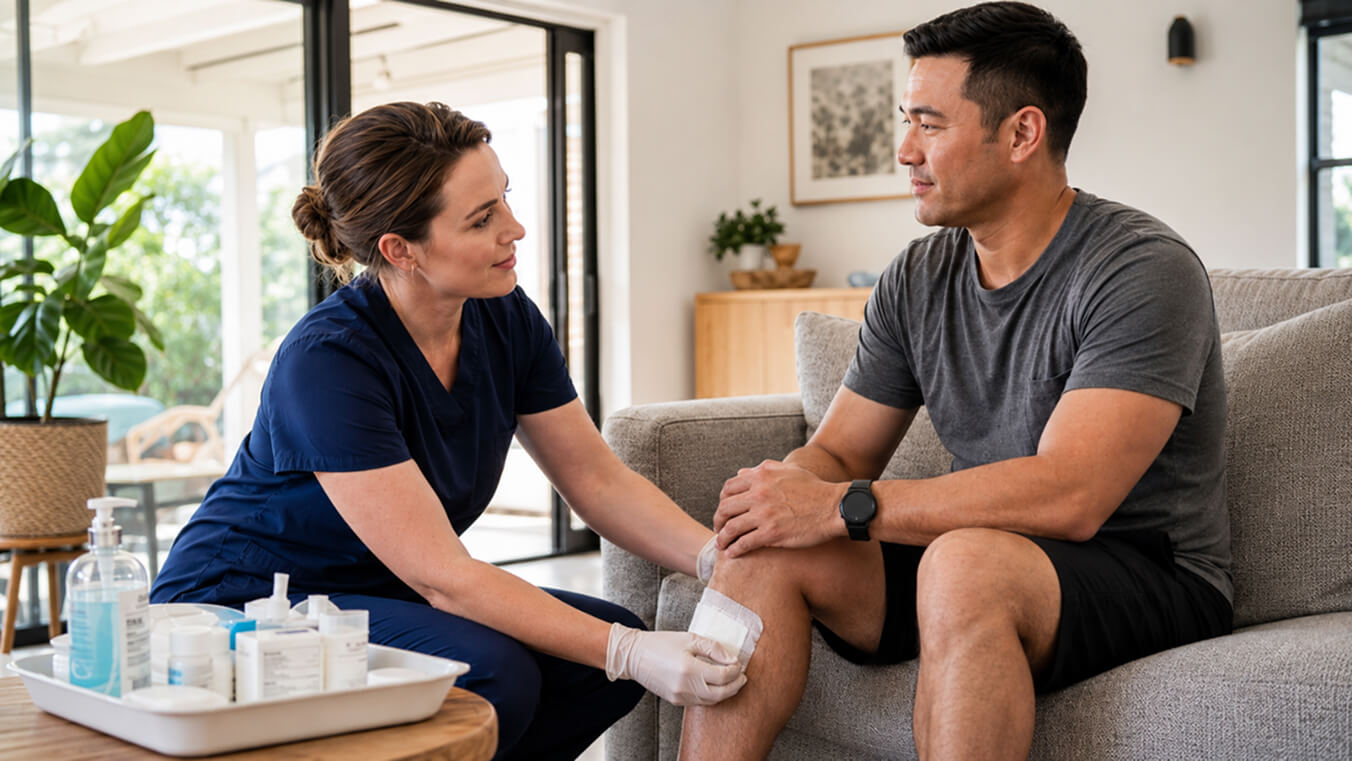
- The first pathway is clinical nursing in your home. Through the DVA Community Nursing Program, which funds registered and enrolled nurses to deliver wound care, dressing changes and other clinical tasks, a qualified nurse comes to you. There is no cost when the service is delivered by a DVA contracted provider and you meet the eligibility rules.
- The second pathway is the dressings and consumables themselves. Veterans with the right card can access prescribed wound care items at a concession rate through the Repatriation Pharmaceutical Benefits Scheme, while consumables used during DVA-funded Community Nursing may be claimed by the contracted provider when they are part of your clinical care.
Both pathways depend on assessed clinical need, your card type and the relevant DVA program rules. Neither is automatic, and that is where many veterans get stuck.
Why Wound Care Is Such a Common Need for Veterans
Wounds are not a minor footnote in health care. They are a large and growing burden across the whole country, and for some veterans, an accepted service-related condition may be part of the reason ongoing wound care is needed.
Why Chronic Wounds Matter
Chronic wounds are wounds that do not heal in the expected time, and they are far more common than most people realise.
A systematic review published in the International Wound Journal found that chronic wounds in Australia:
- Create a multibillion-dollar burden across Australia’s health system each year
- Account for around 2% of national health expenditure
- Create extra costs not captured in that figure, including dressings bought privately and time lost to slow healing
For veterans, the funding question is rarely “is this wound serious enough?” It is usually “what condition is causing it, and is that condition covered by the Veteran Card?” That is where wound care becomes a claims issue, not just a clinical issue. A chronic wound linked to an accepted knee injury, diabetes, restricted mobility, medication side effects or skin cancer pathway may be treated very differently from a wound with no accepted underlying condition.
The most common types tell you a lot about who is affected. A national analysis published in Wound Practice and Research found pressure injuries make up 84% of chronic wounds, followed by venous leg ulcers, diabetic foot ulcers and arterial ulcers. Many of these can link back to diabetes, poor circulation and reduced mobility. For a veteran, the key question is whether the condition behind the wound is covered by their Veteran Card.
For veterans, the picture is sharper. A back or knee injury that limits movement, medication that slows healing, or a skin cancer removed after years of sun exposure can all leave wounds that need ongoing professional care.
Common Wounds Veterans Manage at Home
Common wounds veterans manage at home often fall into a few patterns I see in DVA claims work:
- Surgical wounds after joint replacements or other operations linked to accepted conditions
- Leg and foot ulcers connected to diabetes or circulation problems
- Pressure injuries are an accepted injury that limits movement or time out of bed
- Skin cancer excision sites, which I cover in my guide to DVA skin cancer claims
- Skin tears, which can become harder to manage with age, fragile skin or certain medications
The wound type matters, but the underlying condition matters more. DVA generally looks at whether the treatment connects to a condition covered by your card, not just whether the dressing bill is becoming expensive.
How Your Veteran Card Decides What You Can Access
This is the part that trips up the most veterans, so I will be direct about it. The wound care you can access is not based only on how bad the wound is. It depends on your card, the conditions covered by that card, and whether DVA’s assessed clinical-need rules are met.
When I review a wound care concern, I usually start with three questions:
- What card do you hold?
- What condition is the wound connected to?
- Has DVA accepted or otherwise covered that condition?
Those answers decide whether the next step is a GP referral, an RPBS prescription, a Community Nursing provider, or a better-prepared DVA claim for the condition behind the wound.

Gold Card Holders
If you hold a Veteran Gold Card, you are in the strongest position. DVA explains that Gold Card holders can receive clinically required medical treatment in Australia for all medical conditions, whether or not the condition is service-related. That means a nurse may be able to treat a clinically assessed wound through DVA-funded care, while prescribed wound care items may be available through the RPBS when they are available, clinically needed and prescribed under the relevant rules. You can learn more about this level of cover in my overview of DVA Gold Card benefits and eligibility.
White Card Holders
A Veteran White Card is different. It funds treatment for conditions covered by the card, which usually means conditions DVA has formally accepted as service-related. Eligible veterans may also receive Non-Liability Health Care for mental health, cancer or pulmonary tuberculosis, while DVA’s Community Nursing guidance also recognises White Card access where care relates to an accepted condition, NLHC or Provisional Access to Medical Treatment.
So if your wound relates to a condition covered by your White Card, your card may cover the nursing and dressings when DVA’s clinical-need and program rules are met. If it does not, DVA usually will not fund that care through the White Card pathway, unless another arrangement, such as Non-Liability Health Care or Provisional Access to Medical Treatment, applies. This is why understanding White Card eligibility and what it covers matters so much before you need treatment.
Orange Card Holders
The Veteran Orange Card causes real confusion because its description mentions wound care. DVA states the Orange Card gives access to concessions for prescriptions, wound care items and nutritional supplements, but the card cannot be used for medical or other healthcare treatment. In plain terms, it helps pay for dressings at the pharmacy, but it will not fund a nurse to apply them. It is also limited to Commonwealth and allied veterans and mariners of the Second World War who meet DVA’s age, qualifying service and residency rules, so most younger veterans will never hold one. My guide to the Veteran Orange Card explains who qualifies.
Getting a Nurse to Your Home Through Community Nursing
For many eligible veterans needing hands-on wound care, the Community Nursing Program is the pathway to check first. Here is how access actually works, step by step.
Referral and Timing Rules
You cannot self-refer. DVA requires a written referral from an authorised source before community nursing can start, which means:
- A GP
- A treating medical practitioner in a hospital
- A hospital discharge planner
- A nurse practitioner
The referral has to spell out the nursing care you need for your relevant conditions.
Timing matters too. Referrals from a GP or eligible nurse practitioner are valid for 12 months, while hospital referrals last only 6 weeks before you need a new one from your GP. If you have just come out of the hospital, do not let that window lapse.
What Happens After the Referral
Once a contracted provider receives your referral, they:
- Confirm your eligibility
- Arrange a face-to-face nursing assessment
- Build a care plan
DVA’s Community Nursing provider guidance notes that services within the Schedule of Fees can begin without prior approval, with providers claiming retrospectively each 28-day claim period. For you, that means care can usually start once the referral, eligibility and provider requirements are in place, while care outside the Schedule of Fees may need DVA approval through the Exceptional Case process first.

What Community Nurses Can Do
The program is built around clinical and personal care delivered at home. Services commonly include:
- Wound care and dressing changes
- Medication assistance and management
- Hygiene, showering and dressing support
- Palliative care where needed
The referral should be specific. A vague request for “home help” may not give the provider enough information to assess wound care properly. Ask your GP or discharge team to clearly state the wound, the related condition, the nursing tasks required, and whether dressing changes, monitoring or medication support are needed.

Paying for Dressings Through the RPBS
Some dressings and wound care items run through the pharmaceutical system, while consumables used during DVA-funded Community Nursing may be claimed by the provider under Community Nursing arrangements.
DVA confirms that Gold, White and Orange Card holders can get medicines and wound care items at a concession rate through the RPBS when there is an assessed clinical need and the item is prescribed. The RPBS often covers more items than the standard Pharmaceutical Benefits Scheme.
There is a small cost. At the time of writing, DVA lists the RPBS co-payment as $7.70 for each item until you reach your Safety Net Threshold for the calendar year. White Card holders should remember that the item must relate to a condition covered by their card.
Some RPBS items may also need prior approval before they can be supplied. In practice, this is where I often tell veterans to check the exact dressing name with their GP, pharmacist or wound care provider before paying privately, because the issue may be the prescribing pathway rather than the wound itself.
One practical trap: DVA advises that nurse practitioners cannot prescribe items available only under the RPBS, such as certain RPBS wound care items. If a nurse practitioner is managing your care, you may still need your GP to prescribe specific dressings.
The Step Most Veterans Miss
Here is the honest truth I share with veterans every week. If you hold a White Card, your wound care is usually tied to the conditions covered by your card, and if the condition behind your wound is not covered, funding may not be available through that pathway unless another DVA arrangement applies.
Why the Underlying Condition Matters
That is not a reason to give up. It is a reason to get your claim right. Some veterans may have service-related conditions that could support a claim, but they have never lodged, or an earlier claim was not prepared with enough supporting evidence. This may include:
- Lodging a clear, well-evidenced initial liability claim to establish that your condition is service-related
- Considering whether a permanent impairment claim is relevant where an accepted service-related condition has caused lasting functional loss
- Understanding that permanent impairment is a compensation pathway, separate from treatment funding for wound care
Where Veterans Often Get Stuck
Veterans often contact me frustrated that DVA will not pay for their dressings. In many cases, the issue is not the wound itself. It is that the condition underneath it has not been accepted by DVA, or the claim was not prepared with enough supporting evidence.
If DVA accepts the underlying condition and the treatment meets the relevant program rules, the pathway to funded care becomes much clearer.
This is the work I do with the team at Veterans First Consulting. We are an independent, paid service provider, and I help eligible veterans prepare clear claims so DVA has the evidence it needs to assess their entitlements.
In my experience, the delay usually comes from one of four places: the wound is documented but the underlying condition is not accepted, the referral does not clearly state the nursing task, the provider has not checked the card conditions before starting care or the dressing is being treated as an ordinary pharmacy item when it may need to be checked against RPBS rules.
Before I look at a wound care issue as a DVA claim problem, I ask for the card type, the accepted conditions list, the GP or discharge referral, the dressing or item name and any correspondence showing why DVA or the provider has declined funding.
Taking the Next Step Toward the Care You May Be Entitled To
Wound care should be the easy part of your recovery, not another fight with paperwork. Getting that foundation right gives DVA, your GP and your provider a clearer basis to assess whether funded, dignified care at home is available. If you think a service-related condition is behind your wound, contact Veterans First Consulting today to assess your potential DVA entitlements and start your claim.
Written by

START YOUR CLAIM
Book a Free Call
Join more than 10,000 veterans in getting the support they deserve. Leave us a note and our experts will be in touch shortly to discuss your new claim or claim reassessment.
Zero upfront fees – only pay for successful claims
10,000+ veterans served – we know what we're doing
Australia's largest DVA advocacy group
Explore Related Articles

DVA Gold Card Private Hospital: Your Complete Guide to Coverage and Admission

Does DVA Gold Card Cover Weight Loss Surgery? A Comprehensive Guide for Veterans
